
In this guide, we’ll look at Ford Ranger oil filter compatibility, what to consider when buying a replacement, and three popular oil filter options available.
Ford Ranger Oil Filter
1. Motorcraft FL-910S Oil Filter

- Leading Manufacturer Of High-Quality Products
- International Renown For Our Diverse Range Of Award-Winning Products
- Fully Equipped With State-Of-The-Art Technology
Best for compatible Ford Ranger 2.3L engines
The Motorcraft FL-910S is a popular choice for Ford vehicles and is designed to provide reliable oil filtration. It is particularly relevant to several Ranger 2.3L applications, including older Duratec engines.
Features:
- Designed for effective engine oil filtration.
- Helps capture dirt, metal particles, and other contaminants.
- Supports consistent oil circulation.
- Built to meet Motorcraft application-specific specifications.
- Suitable for specified Ford Ranger 2.3L applications.
2. WIX 51515 Oil Filter

- ENGINEERED FOR SYNTHETIC OILS: Superior filtration for severe conditions; Designed to handle the demands of synthetic mo…
- ADVANCED FILTRATION EFFICIENCY: Next-gen synthetic-blended media with natural fibers eliminates the need for wire backin…
- EXTENDED PERFORMANCE: Outperforms OE standards with up to 20,000-mile change intervals—ideal for synthetic oil users
Best for compatible older Ranger models
The WIX 51515 is an aftermarket oil filter option for several older Ford Ranger engine applications. It is worth considering for owners of classic Rangers who want a replacement from an established filtration manufacturer.
Features:
- Designed to capture contaminants circulating in engine oil.
- Provides filtration media for everyday engine protection.
- Helps maintain cleaner engine oil between oil changes.
- Durable filter construction.
- Available as a replacement for specified FL-1A applications.
Related 2012 Ford Focus Oil Filter(3 Best Picks 2026)
3. FRAM PH3600 Oil Filter
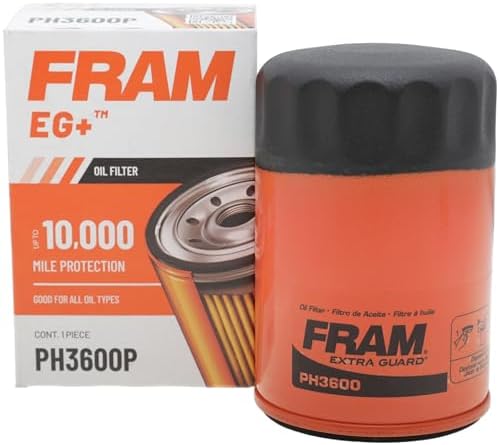
- Proven protection for up to 10,000 miles
- Engineered for use with conventional or synthetic motor oil
- A special blend of fibers and resin creates a proprietary filter media that captures 95% of dirt particles that can caus…
Best aftermarket alternative
The FRAM PH3600 is another option for selected older Ford Ranger engines. It is designed to remove contaminants from circulating oil and support engine lubrication.
Features:
- Designed to trap dirt and other harmful particles.
- Helps maintain cleaner engine oil.
- Supports proper oil flow through the filtration system.
- Durable construction for regular driving conditions.
- Suitable for specified 2.5L four-cylinder and 3.0L V6 Ranger applications.
Product availability and listings can change on Amazon US. Always verify the exact part number against your truck’s model year and engine before purchasing.
Related Ford 7.3 Gas Engine Oil Filter(Top 5 Best Picks)
Why the Ford Ranger Needs a Quality Oil Filter
The Ford Ranger is available with several engine configurations, depending on the model year and market. These engines have different oil filter requirements, so choosing a replacement based only on the vehicle name isn’t enough.
A quality oil filter performs several important functions:
- Removes contaminants: Captures dirt, dust, metal particles, and other impurities before they circulate through the engine.
- Protects engine components: Helps prevent abrasive particles from damaging bearings, pistons, camshafts, and other internal components.
- Maintains oil circulation: Allows engine oil to flow through the lubrication system while trapping unwanted particles.
- Supports consistent lubrication: Helps maintain cleaner oil between scheduled oil changes.
- Improves long-term reliability: Reduces contamination-related engine wear.
For drivers who regularly tow trailers, carry heavy loads, drive in dusty conditions, or spend considerable time in stop-and-go traffic, maintaining the oil filtration system is particularly important.
Related 4.6 Ford Engine Oil Filter(Top 5 Best Picks 2026)
Ford Ranger Oil Filter by Model Year and Engine
| Ford Ranger model/year | Engine | Motorcraft oil filter |
|---|---|---|
| 1983–1997 | 2.0L/2.3L four-cylinder | FL-1A |
| 1983–1992 | 2.8L/2.9L V6 | FL-1A |
| 1991–2008 | 3.0L V6 | FL-400S |
| 1998–2001 | 2.5L four-cylinder | FL-400S |
| 2001–2011 | 2.3L four-cylinder | FL-910S |
| 2001–2011 | 4.0L V6 | FL-820S |
| 2019–2023 | 2.3L EcoBoost | Verify exact application |
Important: Newer Ford 2.3L applications may have different filter mounting and thread specifications. Always check the owner’s manual or an authoritative vehicle-specific parts catalogue before purchasing a replacement.
Related 2018 Ford Explorer Oil Capacity(+Recommended Oils)
How to Choose the Right Ford Ranger Oil Filter
Selecting the correct oil filter involves more than choosing a familiar brand. You should consider several factors to ensure the replacement works properly with your engine.
1. Engine Compatibility
Engine compatibility should be your first consideration. Ford Ranger models have used different engines over the years, including 2.3L, 2.5L, 3.0L, 4.0L, and newer EcoBoost configurations.
Each engine may require a different filter size, thread specification, gasket dimensions, and filtration capacity.
Check your owner’s manual or use your vehicle identification number (VIN) to identify the correct replacement.
2. Filtration Efficiency
A good oil filter should capture contaminants without unnecessarily restricting oil flow.
Engine oil collects dirt, carbon deposits, and microscopic metal particles as it circulates. Effective filtration keeps these materials from repeatedly reaching sensitive engine components.
Look for a filter from a reputable manufacturer with published application and filtration specifications.
3. Filter Construction
The construction of an oil filter influences its durability and performance.
Important components include:
- Filter media: Traps contaminants while allowing oil to pass through.
- Anti-drainback valve: Helps prevent oil from draining out of the filter when the engine is switched off, where equipped.
- Bypass valve: Allows oil to continue circulating if the filter media becomes restricted, when incorporated into the design.
- Housing: Protects internal components against normal operating pressures.
- Sealing gasket: Prevents oil from leaking around the filter mounting surface.
A properly constructed filter should maintain a secure seal and withstand normal engine operating conditions.
4. Driving Conditions
Your driving environment also influences how frequently you should replace the oil filter.
For example, Ford Ranger owners who frequently drive on dusty roads, tow heavy trailers, or operate in stop-and-go traffic may expose their engines to more demanding conditions.
In these situations, following the severe-service maintenance schedule in the owner’s manual is important.
Related Motorcraft Oil Filter Cross Reference(for All Brands)
When Should You Replace a Ford Ranger Oil Filter?
The oil filter should generally be replaced whenever you change the engine oil.
For most Ford Ranger models, this means replacing the filter according to the recommended oil change interval in the owner’s manual.
Depending on the model year, engine, oil type, and driving conditions, the recommended service interval can vary.
Some signs that your oil filtration system needs attention include:
- An oil leak around the filter housing.
- A damaged or corroded filter casing.
- An oil pressure warning light.
- Evidence of incorrect filter installation.
- Unusual engine noises accompanied by oil pressure problems.
Remember that these symptoms do not automatically mean the oil filter is faulty. Oil pressure problems can also result from low oil levels, worn engine components, or other lubrication system issues.
How to Replace a Ford Ranger Oil Filter
Replacing the oil filter is a relatively straightforward maintenance task for someone with basic mechanical experience.
Follow these steps:
- Park the Ranger on a level surface and switch off the engine.
- Allow the engine oil to cool sufficiently before working underneath the vehicle.
- Raise the vehicle using appropriate lifting equipment if necessary.
- Position an oil drain pan underneath the engine.
- Drain the old engine oil.
- Locate the oil filter and use an appropriate filter wrench to remove it.
- Check that the old filter gasket has not remained attached to the engine.
- Apply a small amount of fresh engine oil to the new filter’s rubber gasket where applicable.
- Install the replacement filter according to the manufacturer’s tightening instructions.
- Refill the engine with the recommended oil quantity and viscosity.
- Start the engine and check for leaks around the filter.
- Switch off the engine, allow the oil to settle, and check the dipstick.
Avoid overtightening the filter because this can damage the gasket or make future removal difficult.
FAQs
What oil filter does a Ford Ranger use?
The Ford Ranger uses different oil filters depending on its model year and engine. Common Motorcraft options include the FL-1A, FL-400S, FL-820S, and FL-910S. Newer models may require different specifications, so verify the exact application before purchasing.
Is Motorcraft better than aftermarket Ford Ranger oil filters?
Motorcraft is a strong OEM-style choice because it is designed around Ford vehicle applications. However, aftermarket manufacturers such as WIX and FRAM also offer quality filtration products. The most important consideration is correct vehicle compatibility and filter specifications.
Can I change my Ford Ranger oil filter without changing the oil?
Yes, but it is generally not recommended as routine maintenance. Replacing the filter during every scheduled oil change ensures that both the engine oil and filtration system are refreshed together.
How long does a Ford Ranger oil filter last?
An oil filter should generally last for the recommended engine oil service interval. Replacing it during every scheduled oil change is a practical way to maintain consistent filtration.
Does a bigger oil filter provide better engine protection?
Not necessarily. A larger filter does not automatically provide better filtration or improved engine protection. The correct filter must have compatible mounting dimensions, filtration characteristics, and bypass valve specifications.
Final Thoughts
Choosing the right Ford Ranger oil filter helps maintain clean engine oil and protect important internal components from premature wear. Motorcraft, WIX, and FRAM offer established filtration options worth considering.
However, always confirm the filter part number using your Ranger’s model year, engine configuration, and VIN. A filter that fits one Ranger engine may not fit another, even when both vehicles belong to the same generation.
Replacing the oil filter during every scheduled oil change is one of the simplest ways to maintain your Ford Ranger’s engine and support long-term reliability.