
Observing the color of diesel engine oil is one of the simplest ways to evaluate the condition of the oil and the health of your engine.
A diesel engine oil color chart helps vehicle owners, mechanics, and equipment operators quickly identify whether the oil is fresh, aging, contaminated, or overdue for replacement.
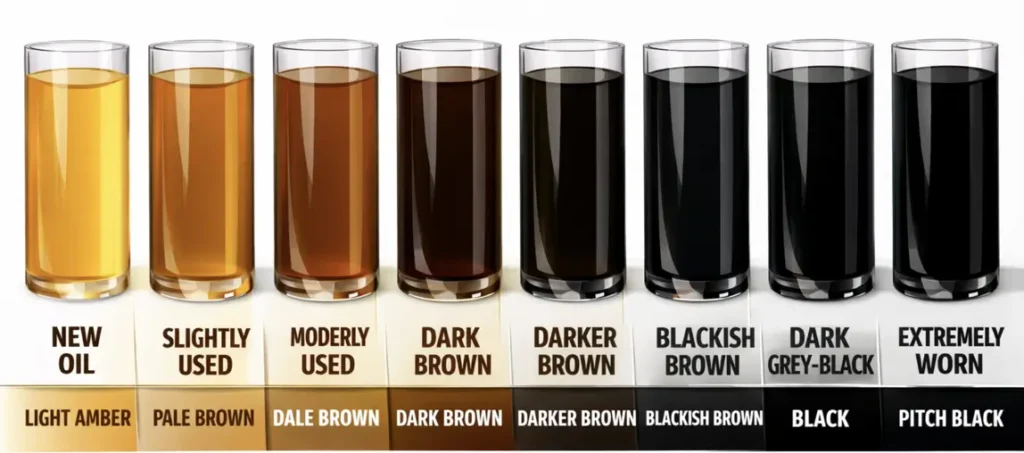
Diesel Engine Oil Color Chart
| Oil Color | Appearance | Condition of Oil | Possible Cause | Recommended Action |
|---|---|---|---|---|
| Light Amber | Clear and golden | Fresh oil | Newly installed engine oil | Normal condition |
| Amber | Slightly darker but still transparent | Good condition | Light engine use | Continue normal operation |
| Dark Amber | Noticeably darker | Moderate usage | Early soot buildup | Monitor oil condition |
| Light Brown | Brown but still transparent | Used oil | Normal combustion contaminants | Prepare for next oil change |
| Medium Brown | Dark brown | Aging oil | Increased soot and oxidation | Consider oil change soon |
| Dark Brown | Very dark brown | Heavily used oil | High soot levels | Oil change recommended |
| Black | Thick and very dark | Typical in diesel engines | Soot suspension in oil | Check oil interval and condition |
| Jet Black | Opaque black | Extremely dirty oil | Long oil interval or heavy engine load | Immediate oil change recommended |
| Milky Brown | Creamy or milky | Contaminated oil | Coolant leak or water intrusion | Inspect engine immediately |
| Gray | Metallic gray | Abnormal wear | Metal particles in oil | Engine inspection required |
| Foamy Brown | Bubbly appearance | Air contamination | Overfilled oil or aeration | Check oil level and system |
| Diesel-Smelling Black | Thin black oil with strong fuel smell | Fuel dilution | Injector problems or incomplete combustion | Diagnose fuel system |
Related Car Engine Oil Color Chart(Color That Signals Immediate Danger)
Why Diesel Engine Oil Changes Color
Diesel engines produce more soot and combustion byproducts than gasoline engines. Because of this, diesel engine oil often turns darker much faster. However, a dark color does not always mean the oil is bad.
Several factors cause oil color changes:
- Soot accumulation
- Oxidation due to heat
- Fuel contamination
- Coolant leaks
- Metal particles from engine wear
- Extended oil use
Monitoring oil color alongside oil level, smell, and engine performance provides a better understanding of engine condition.
Related Diesel Engine Oil Additives(Benefits & Top Oil Additives)
What Fresh Diesel Engine Oil Looks Like
Fresh diesel engine oil is typically light amber or golden in color and has a clear appearance. When you check the dipstick after an oil change, the oil should look clean and transparent.
Fresh oil contains additives designed to:
- Prevent corrosion
- Reduce friction
- Neutralize acids
- Suspend soot particles
Because diesel engines generate soot quickly, the oil can darken within a few hundred miles of driving, which is completely normal.
Related Whats the Best Diesel Fuel Additive(Top 5 Picks 2026)
Why Diesel Engine Oil Turns Black Quickly
One common concern among diesel engine owners is how quickly the oil turns black. Unlike gasoline engines, diesel engines are designed to suspend soot particles in the oil.
This is actually a sign that the oil is working properly.
Diesel engine oil contains strong detergent additives that keep soot suspended instead of allowing it to deposit on engine parts. Because of this, diesel oil may turn black shortly after an oil change.
However, color alone should not determine oil condition. Oil viscosity, smell, and mileage are also important factors.
Signs Your Diesel Engine Oil Needs Changing
1. Extremely Thick Black Oil
If the oil becomes thick, sticky, or sludge-like, it indicates excessive contamination and oxidation.
2. Milky or Creamy Oil
Milky oil usually means coolant is leaking into the engine oil, often due to:
- Blown head gasket
- Cracked engine block
- Faulty oil cooler
This condition requires immediate attention.
3. Strong Diesel Fuel Smell
If the oil smells strongly like diesel fuel, fuel dilution may be occurring. This can be caused by:
- Faulty injectors
- Poor combustion
- Short driving cycles
Fuel dilution reduces oil lubrication ability.
4. Metallic Sparkles
Shiny particles in the oil indicate metal wear, which may come from bearings, pistons, or internal engine components.
Related Diesel Engine Oil Grades Chart(Ultimate Guide)
How to Check Diesel Engine Oil Color
Checking oil color is simple and takes only a few minutes.
Step 1: Warm the Engine
Run the engine for a few minutes so the oil circulates properly.
Step 2: Turn Off the Engine
Allow the engine to sit for about 5 minutes.
Step 3: Remove the Dipstick
Pull out the dipstick and wipe it with a clean cloth.
Step 4: Reinsert and Remove
Insert the dipstick again and remove it to check the oil.
Step 5: Inspect the Oil
Look at the oil color and consistency under good lighting.
You can compare the oil with the diesel engine oil color chart to estimate its condition.
Related Diesel Truck Transmission Fluid(Top 5 Best Picks)
Factors That Affect Diesel Engine Oil Color
Several factors influence how quickly diesel oil changes color.
Engine Load
Heavy-duty trucks and towing vehicles produce more soot and heat, which darkens oil faster.
Driving Conditions
Frequent short trips prevent the engine from reaching full operating temperature, increasing contamination.
Oil Quality
High-quality synthetic diesel oil resists oxidation and contamination better than conventional oil.
Oil Change Interval
Longer oil intervals naturally result in darker oil.
Recommended Diesel Oil Change Intervals
The oil change interval depends on the engine type, oil quality, and operating conditions.
Typical intervals include:
- Passenger diesel vehicles: 5,000 – 10,000 miles
- Heavy-duty diesel trucks: 10,000 – 25,000 miles
- Diesel generators or equipment: 200 – 500 hours of operation
Always follow the manufacturer’s recommended oil change schedule.
Diesel Oil Analysis vs Color Inspection
Professional mechanics often perform oil analysis tests to determine the exact condition of engine oil.
Oil analysis checks for:
- Metal wear particles
- Fuel dilution
- Coolant contamination
- Viscosity breakdown
- Additive depletion
While oil color gives a quick visual clue, laboratory testing provides a much more accurate assessment.
Tips for Maintaining Healthy Diesel Engine Oil
To extend engine life and maintain oil quality, follow these maintenance tips:
- Use manufacturer-recommended diesel engine oil
- Replace the oil filter during every oil change
- Check oil level regularly
- Avoid excessively long oil change intervals
- Inspect for leaks or contamination
- Monitor engine temperature
Regular maintenance ensures the oil continues to protect engine components effectively.
Final words
A diesel engine oil color chart provides a quick visual guide for understanding the condition of your engine oil. Fresh oil typically appears light amber, while used diesel oil gradually turns dark brown or black due to soot and combustion byproducts.
Although dark oil is normal in diesel engines, unusual colors such as milky, gray, or foamy oil may indicate contamination or mechanical problems.