

One of the easiest ways to assess the health of your transmission fluid is by looking at its color. Understanding what color transmission fluid should beand what different colors mean can help you catch problems early and avoid costly repairs.
What Color Is Transmission Fluid
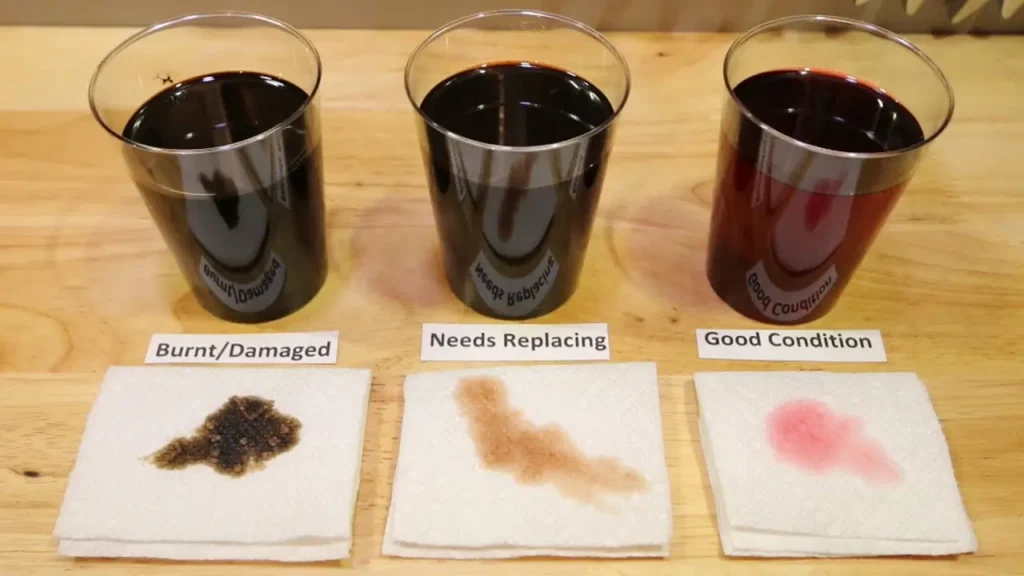
Transmission fluid is normally bright red or light pink when it is clean and in good condition, especially in automatic transmissions. As it ages, the fluid may turn dark red or light brown, which indicates wear and the need for a future fluid change.
Dark brown or black transmission fluid usually means the fluid has overheated or broken down and should be changed immediately, while a burnt smell signals possible internal transmission damage.
Milky or foamy pink fluid indicates coolant or water contamination, which is a serious issue that requires urgent repair. Manual transmission fluid is typically amber or golden rather than red, but it should never appear black or burnt.
Related Car Engine Oil Color Chart(Color That Signals Immediate Danger)
What Color Is Transmission Fluid Normally?
New or healthy transmission fluid is typically bright red or pink. This color comes from dye added by manufacturers, making it easy to identify leaks and distinguish transmission fluid from other vehicle fluids.
For most vehicles:
- Automatic transmission fluid (ATF): Bright red or light pink
- Continuously variable transmission (CVT) fluid: Light red, amber, or slightly golden (varies by manufacturer)
- Manual transmission fluid: Amber or golden brown, similar to gear oil or motor oil
A bright, clear appearance usually means the fluid is in good condition and performing as intended.
Related Engine Coolant Color Chart(For All Coolant Types)
Why Is Transmission Fluid Red?
Transmission fluid is dyed red for practical reasons. The red color:
- Makes leaks easier to identify under the vehicle
- Helps technicians distinguish it from engine oil, coolant, or brake fluid
- Allows quick visual inspection of fluid condition
While the dye itself does not affect performance, changes in color over time can signal wear, overheating, or contamination.
Transmission Fluid Color and What Each Color Means
1. Bright Red or Pink Transmission Fluid
This is the ideal color. Bright red or pink transmission fluid is clean, fresh, and effective. It provides proper lubrication, cooling, and hydraulic pressure for smooth shifting.
What it means:
- Fluid is in good condition
- No immediate service needed
- Transmission is likely operating normally
2. Light Brown or Dark Red Transmission Fluid
As transmission fluid ages, it naturally darkens. Light brown or dark red fluid usually indicates moderate wear but may still be usable depending on mileage and driving conditions.
What it means:
- Fluid is aging
- Lubricating properties may be declining
- A fluid change may be recommended soon
At this stage, checking the service interval in your owner’s manual is important.
Related Dipstick Engine Oil Color Chart(All Colors + Meanings)
3. Dark Brown or Black Transmission Fluid
Dark brown or black transmission fluid is a warning sign. This color usually means the fluid has been overheated or severely degraded.
What it means:
- Excessive heat or friction inside the transmission
- Fluid has lost its lubricating and cooling properties
- Internal wear may be occurring
If transmission fluid appears black, it should be changed immediately. Continuing to drive may cause serious transmission damage.
4. Burnt or Black Fluid With a Burnt Smell
Color alone isn’t the only indicator, smell matters, too. Burnt transmission fluid often smells similar to burnt toast.
What it means:
- Transmission overheating
- Possible slipping clutches or internal damage
- Fluid breakdown due to extreme heat
This condition often requires professional inspection, not just a fluid change.
5. Milky Pink or Strawberry-Colored Transmission Fluid
Milky or foamy transmission fluid is a serious issue. This usually indicates coolant contamination due to a failed radiator or transmission cooler.
What it means:
- Water or coolant has mixed with transmission fluid
- Lubrication is severely compromised
- The risk of transmission failure is high
Driving with contaminated fluid can destroy a transmission quickly and should be addressed immediately.
Related Transmission Temp Gauge(Top 5 BEST Picks 2026)
6. Green, Blue, or Yellow Transmission Fluid
Some newer or specialty transmission fluids may appear green, blue, or yellow, depending on manufacturer formulations.
What it means:
- Fluid color may be normal for that vehicle
- Always check manufacturer specifications
- Color alone should not be judged without knowing the correct fluid type
Never mix transmission fluids unless they are explicitly compatible.
Does Manual Transmission Fluid Have the Same Color?
Manual transmissions often use gear oil rather than traditional ATF. This fluid is usually:
- Amber or golden brown when new
- Dark brown as it ages
Because manual transmission fluid is not dyed red, its color is closer to engine oil. However, dark or burnt-smelling fluid still indicates wear or overheating.
How to Check Transmission Fluid Color
Checking transmission fluid color is straightforward on vehicles with a dipstick.
Steps:
- Park on level ground
- Warm up the engine
- With the engine running, remove the transmission dipstick
- Wipe it clean and reinsert
- Remove again and observe the color and smell
For sealed transmissions without dipsticks, fluid checks should be performed by a professional.
Can Transmission Fluid Change Color Quickly?
Yes. Transmission fluid can darken rapidly if:
- The vehicle is towing heavy loads
- The transmission overheats
- There is an internal mechanical failure
- An incorrect fluid type is used
Rapid color change often signals an underlying problem that needs inspection.
Is It Safe to Drive With Dark Transmission Fluid?
Driving with dark or burnt transmission fluid is risky. A degraded fluid cannot:
- Properly lubricate components
- Maintain hydraulic pressure
- Cool internal parts effectively
This increases friction, accelerates wear, and can lead to transmission failure.
When Should Transmission Fluid Be Changed?
While service intervals vary, general guidelines include:
- Every 30,000–60,000 miles for automatic transmissions
- More frequent changes for severe driving conditions
- Immediate service if the fluid is black, burnt, or contaminated
FAQs
What color is bad transmission fluid?
Bad transmission fluid is usually dark brown or black instead of bright red or pink. This color change means the fluid has broken down due to heat, age, or internal wear, and it can no longer properly lubricate or cool the transmission. A burnt smell often confirms the fluid is in poor condition.
What color is leaking transmission fluid?
Leaking transmission fluid is typically red or pink when fresh and clean. If the leak appears dark red, brown, or nearly black, it indicates old or degraded fluid. Milky or foamy fluid suggests coolant contamination, which is a serious problem.
How to tell if it’s oil or transmission fluid?
Transmission fluid is usually red or pink and has a slightly sweet or chemical smell, while engine oil is amber to dark brown or black and smells like burnt fuel when old. Oil also feels thicker and darker, whereas transmission fluid is thinner and more slippery.
What are symptoms of low transmission fluid?
Common symptoms of low transmission fluid include delayed or rough gear shifting, slipping gears, unusual noises, overheating, and a burning smell. In severe cases, the vehicle may struggle to move or fail to engage gears at all.
How to know if transmission fluid needs to be replaced by color?
Transmission fluid needs to be replaced if it appears dark red, brown, or black instead of bright red or pink. A burnt odor, cloudy appearance, or presence of debris are additional signs that the fluid has degraded and should be changed immediately.
Final Thoughts
So, what color is transmission fluid? In a healthy condition, it should be bright red or pink for most automatic transmissions and amber for manual transmissions. Any shift toward dark brown, black, or milky colors signals trouble and should not be ignored.
Regularly checking transmission fluid color is one of the simplest and most effective ways to protect your transmission. Catching issues early can save thousands in repair costs and keep your vehicle running smoothly for years.