


Oil color can help you understand the condition of the oil, spot early mechanical issues, and determine whether it’s time for an oil change.
This guide breaks down the dipstick engine oil color chart, what each color means, when to worry, and how to keep your engine oil in optimal condition.
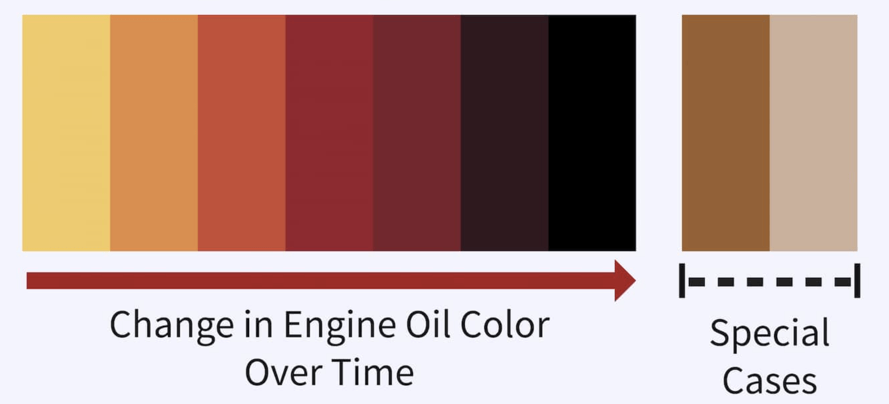
Dipstick Engine Oil Color Chart
| Oil Color | Appearance Description | What It Means | Recommended Action |
|---|---|---|---|
| Light Amber / Golden | Clear, light, translucent | Fresh, clean oil in good condition | No action needed; oil is healthy |
| Medium Brown | Slightly darker, still smooth and translucent | Normal oil that has been used for some miles | Continue driving; monitor if near change interval |
| Dark Brown | Much darker but still smooth; opaque | Oil is aging and nearing the end of its service life | Schedule an oil change soon |
| Black | Very dark or pitch-black; may look dirty | Oil is old, oxidized, or full of contaminants | Change oil immediately; check oil filter |
| Milky / Creamy / Tan | Light brown, foamy, or coffee-with-milk appearance | Coolant or water contamination; possible blown gasket | Stop driving; inspect engine immediately |
| Gray or Metallic | Grayish tint with visible metallic shimmer | Metal particles from internal engine wear | Seek mechanical diagnosis urgently |
| Dark, Thick Sludge | Tar-like, very thick, sticky | Severe oil neglect; sludge buildup | Engine flush and immediate oil change required |
| Red Tint | Red or pinkish color | Transmission fluid contamination | Diagnose leak; do not ignore |
| Green Tint | Greenish or neon-like color | Coolant contamination mixing with oil | Immediate inspection; possible coolant system issue |
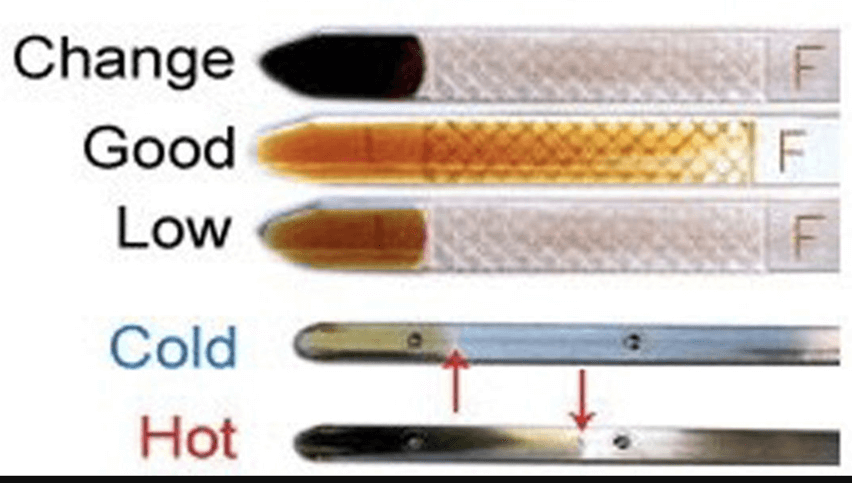
Related Car Engine Oil Color Chart(Color That Signals Immediate Danger)
1. Light Amber or Golden Brown (Fresh or Normal Oil)
This is what good, clean engine oil looks like. Fresh oil is golden, translucent, and smooth to the touch. If your oil appears this way, it’s lubricating effectively.
What it means:
- Oil is clean and performing well
- No immediate need for an oil change
- Your engine is likely in good health
2. Medium Brown (Normal Use, Still Okay)
After driving a few hundred miles, oil naturally turns darker as it absorbs heat and contaminants.
What it means:
- Oil is aging but still functional
- No urgent action required
- Continue monitoring, especially if nearing your change interval
Related Engine Coolant Color Chart(For All Coolant Types)
3. Dark Brown (Oil Change Recommended)
Dark brown oil usually appears after several thousand miles. It may still feel smooth, but it looks heavily used.
What it means:
- Oil is nearing the end of its service life
- Time to schedule an oil change
- Not a sign of damage unless the texture changes
4. Black Oil (Old, Dirty, or Overdue)
Black oil on the dipstick usually indicates dirt, soot, and sludge buildup. Diesel engines often turn oil black faster due to combustion byproducts.
What it means:
- Oil is overdue for change
- Poor lubrication may start causing wear
- Consider checking the oil filter condition
Note: Black oil alone doesn’t always indicate damage, diesel engines especially, can blacken oil quickly.
5. Milky, Creamy, or Foamy Oil (Water or Coolant Contamination)
This is one of the most serious oil color warnings. Milky or creamy oil looks like coffee with milk or a light tan sludge.
What it means:
- Possible coolant leak
- Blown head gasket
- Cracked engine block or cylinder head
- Water contamination from condensation (small amounts)
If your dipstick shows a milky color, stop driving and get the vehicle inspected immediately. Oil mixed with coolant can destroy bearings and internal engine components.
Related MOA engine oil additive(Benefits & 5 Best Additive in 2025)
6. Gray or Metallic Oil (Metal Shavings)
This color is often accompanied by a gritty texture.
What it means:
- Internal engine wear
- Possible failing components, such as bearings or camshafts
- Serious mechanical issue developing
Metallic oil should never be ignored, as it suggests engine parts are grinding.
7. Dark, Thick, Sludgy Oil (Severe Neglect)
If the oil looks tar-like or is extremely thick:
What it means:
- Oil hasn’t been changed for a very long time
- Sludge buildup is restricting oil flow
- High risk of engine failure
A full engine flush and multiple oil changes may be required.
8. Red or Green Oil (Incorrect Fluid or Leak)
Engine oil should never be red or green. These colors indicate contamination from other fluids.
Red color means:
- Transmission fluid leaks into the engine (rare, but serious)
Green color means:
- Coolant contamination
Either case requires immediate diagnostic attention.
Related Engine Burning Oil Treatment(5 Best Additive to Stop Oil Burning)
How to Check Oil Color Properly
To get an accurate reading, follow these steps:
- Warm the engine, then turn it off and wait 5 minutes.
- Remove the dipstick and wipe it clean.
- Insert it fully, then pull it out again.
- Check both level and color under good natural light.
- Rub a drop of oil between your fingers to feel the texture.
- Smooth = normal
- Gritty = wear or dirt
When to Change Engine Oil Based on Color
While mileage or time intervals are the main indicators, color helps too:
- Golden to medium brown: Safe to continue driving
- Dark brown: Change soon
- Black: Change immediately
- Milky, red, green, or metallic: Seek mechanical diagnosis
How to Keep Your Oil Clean Longer
- Use high-quality synthetic oil
- Replace your oil filter at every oil change
- Avoid short trips that prevent oil from reaching optimal temperature
- Keep engine coolant in proper condition
- Fix leaks promptly
Clean oil ensures your engine lasts longer and performs better.
Related Liqui Moly Engine Oil Additive(Top 5 Best Picks)
FAQs
What color should engine oil be on the dipstick?
Engine oil should ideally appear light amber or golden when it’s fresh and in good condition. As it accumulates miles, it may turn medium brown, which is still normal.
What color is oil when it’s bad?
Bad oil is usually dark brown to black, especially when it becomes thick, dirty, or contaminated with debris. Milky, foamy, or metallic-colored oil also indicates problems.
What does bad oil look like on the dipstick?
Bad oil may appear black, gritty, sludgy, milky, or metallic. Any color that looks unusual, like gray, red, or green, signals contamination or mechanical issues that need attention.
Related Zinc Additive Engine Oil(Benefits & Hidden Formula)
How to read dipstick engine oil?
Pull out the dipstick, wipe it clean, reinsert it fully, then pull it out again.
Check for:
- Level: Should be between the MIN and MAX marks.
- Color: Light to medium brown is normal; very dark or milky is not.
- Texture: Smooth is normal; gritty indicates wear or debris.
What’s a healthy oil color?
A healthy oil color is light amber to medium brown, smooth, and translucent. This shows the oil is still lubricating effectively.
Is the oil dipstick always yellow?
Most vehicles use a yellow or orange dipstick handle for engine oil to make it easy to spot, but some manufacturers use different colors. It is not always yellow, but it is usually brightly colored.
Final Thoughts
The dipstick engine oil color chart is a simple but powerful tool for understanding your engine’s health. By checking the color regularly, you can catch early warning signs, plan timely oil changes, and prevent costly repairs. Whether your oil is golden, brown, black, or showing unusual colors, knowing what each shade means helps you make the right maintenance decisions.