
Choosing the right coolant for a Detroit Diesel engine is essential for maintaining proper operating temperature, protecting internal components, and preventing corrosion.
Below are five coolant options worth considering for Detroit Diesel engines.
Coolant for Detroit Diesel Engines
1. Detroit Diesel Power Cool Plus Extended Life Coolant
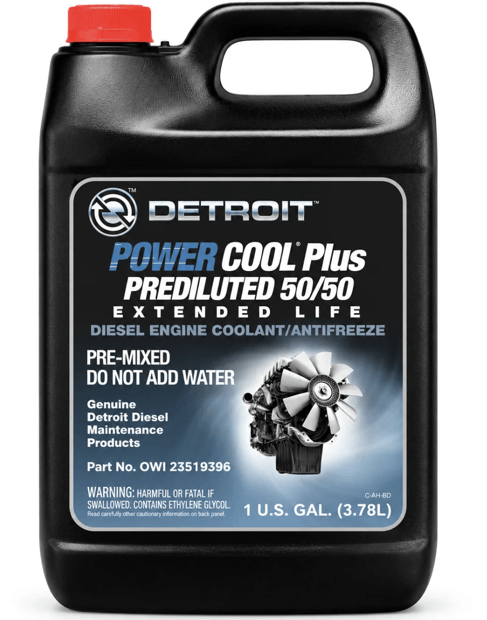
Detroit Diesel Power Cool Plus is one of the first coolants to consider when servicing Detroit engines that require extended-life coolant (ELC). It is formulated for heavy-duty diesel cooling systems and provides corrosion protection without relying on conventional supplemental coolant additives (SCAs).
It is particularly worth considering for newer DD-series engines that specify OAT extended-life coolant, provided the product matches the required specification.
Features:
- Designed for heavy-duty diesel engine cooling systems.
- Extended-life coolant formulation.
- Organic Acid Technology (OAT) protection.
- Helps protect against corrosion, scale, and cavitation.
- Nitrite-free formulation.
- Available in concentrated and premixed formulations, depending on the product version.
Related 12.7 Series 60 Detroit Engine Oil Capacity(For All 12.7L Series)
2. Fleetguard ES Compleat OAT Coolant

- Mild Acid-Based Chelating Cleaner
- Most Effective Cooling System Oil/Fuel Contamination-Cleaning Agent on Market
- More Effective than Automotive Distributor Detergent Powders
Fleetguard ES Compleat OAT is a heavy-duty coolant option designed for diesel engines that require compatible extended-life coolant technology. It is widely used in commercial trucks, fleet equipment, and heavy-duty diesel applications.
Before using it in a Detroit Diesel engine, verify that the exact ES Compleat formulation meets the coolant specification required for your engine. Coolant products sold under similar names may use different technologies or formulations.
Features:
- Heavy-duty diesel cooling system formulation.
- Extended-life coolant technology.
- Designed to protect cooling system metals against corrosion.
- Helps protect against cavitation and scale formation.
- Available in concentrate and premixed versions.
- Suitable for compatible commercial diesel applications.
3. Shell Rotella ELC Antifreeze/Coolant
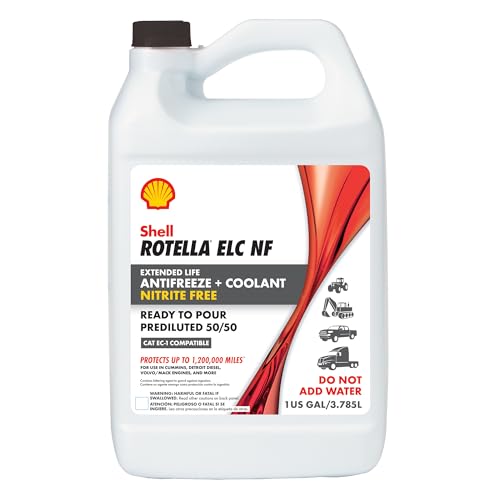
- Formulated with Shell Rotella ELC OAT technology for extended life operation up to 1,200,000 miles in Class 8 over-the-r…
- For use with diesel, gasoline, and natural gas-powered engines, along with light-duty passenger cars and pick-up trucks
- Nitrite-free formula for improved protection of aluminum components in modern engines including brazed aluminum heat exc…
Shell Rotella ELC is another heavy-duty coolant worth comparing when looking for coolant for commercial diesel engines. It is designed for demanding engine applications and provides cooling system protection against corrosion and deposits.
Check the coolant’s exact formulation and specification before using it in a Detroit Diesel engine. The correct chemistry matters more than the coolant brand or color.
Features:
- Heavy-duty diesel coolant formulation.
- Designed for commercial engine applications.
- Helps protect against corrosion.
- Helps reduce scale and deposit formation.
- Available in different package sizes and formulations.
- Intended for use in compatible heavy-duty cooling systems.
Related Coolant Mix Ratio Chart(For All Coolant Types)
4. Final Charge Global Extended Life Coolant

- CONCENTRATED ANTIFREEZE AND COOLANT: Extended Life coolant for ALL heavy-duty diesel, gasoline, and natural gas engine c…
- HEAT TRANSFER: Excellent heat transfer for high-temperature applications such as engines with EGR and SCR systems
- ADDED VERSATILITY: Can be mixed with other coolants (to maintain corrosion protection, contamination levels should be ke…
Final Charge Global Extended Life Coolant is a heavy-duty coolant designed for commercial diesel engines and other demanding applications. Its extended-life formulation is intended to provide long-term cooling system protection with proper maintenance.
It can be a candidate for certain Detroit Diesel applications when the exact coolant formulation is listed as approved or meets the required Detroit specification. Do not assume that every extended-life coolant is automatically compatible with every Detroit engine.
Features:
- Extended-life heavy-duty coolant formulation.
- Designed for commercial diesel engines.
- Helps protect against corrosion and cooling system deposits.
- Formulated for long service intervals when properly maintained.
- Available in premixed and concentrate options.
- Suitable for compatible heavy-duty truck and fleet applications.
5. Detroit Diesel Power Cool Fully Formulated Coolant
Detroit Diesel Power Cool is a conventional heavy-duty coolant intended for engines that require standard-life coolant (SLC) rather than OAT extended-life coolant. It is formulated with corrosion inhibitors designed to protect heavy-duty diesel cooling system components.
This is an option for older Detroit Diesel engines and other applications that specifically require conventional coolant chemistry. It should not be substituted for an OAT coolant unless the engine’s requirements allow it.
Features:
- Conventional heavy-duty diesel coolant formulation.
- Fully formulated with corrosion inhibitors.
- Designed for heavy-duty engine cooling systems.
- Helps protect against corrosion and deposits.
- Suitable for applications requiring conventional coolant chemistry.
- Available in concentrated and premixed versions, depending on packaging.
Related Engine Coolant Color Chart(For All Coolant Types)
What Coolant Does in a Detroit Diesel Engine
Coolant does more than prevent an engine from overheating. It circulates through the engine block, cylinder head, radiator, water pump, and other cooling system components to absorb and transfer heat.
Detroit Diesel engines generate substantial heat under load, particularly when hauling heavy trailers, climbing hills, or operating in demanding conditions. Coolant helps maintain a stable operating temperature so the engine can perform efficiently.
Proper coolant also protects internal cooling system passages, radiator surfaces, water pumps, cylinder liners, and other components against rust, corrosion, and deposits.
In some Detroit Diesel engines, coolant cavitation is another important concern. Cavitation occurs when vapor bubbles form and collapse near surfaces exposed to coolant pressure changes. In susceptible engine designs, this can contribute to damage to cylinder liners and other components. Heavy-duty diesel coolant formulations contain inhibitors designed to help prevent this type of damage.
What Coolant Does a Detroit Diesel Engine Use?
The coolant required depends on the engine series and its original cooling system configuration.
Newer Detroit DD5, DD8, DD13, DD15, and DD16 engines may use either extended-life coolant (ELC) with Organic Acid Technology (OAT) or standard-life coolant (SLC) with conventional inhibitors, depending on their factory fill and specification.
Detroit identifies Power Cool Plus for approved OAT/ELC applications and Power Cool for approved conventional/SLC applications. Older Series 50, Series 60, Series 55, MBE 900, and MBE 4000 engines may have different coolant requirements depending on how the cooling system was originally configured.
Always check the owner’s manual, engine serial number, and existing coolant specification before choosing a replacement.
Related OBD2 Scanner for Diesel Engines(5 Best Picks 2026)
OAT Coolant vs. Conventional Coolant
Detroit Diesel cooling systems may use two major coolant technologies.
OAT extended-life coolant: Organic Acid Technology coolant uses organic corrosion inhibitors and is designed for extended service intervals when maintained according to the manufacturer’s requirements. It is commonly associated with newer diesel engine cooling systems.
Conventional coolant: Standard-life coolant uses traditional corrosion inhibitor chemistry. Depending on the application, it may require regular testing and supplemental coolant additives (SCAs) to maintain the correct inhibitor concentration.
These coolant technologies should not be mixed casually. Adding conventional coolant to an OAT system, or OAT coolant to a conventional system, can compromise the intended service interval and maintenance chemistry. If the coolant type is unknown, identifying it before topping off is better than guessing.
How to Choose Coolant for Detroit Diesel
When purchasing coolant for a Detroit Diesel engine, consider the following factors:
- Engine model: DD15, DD13, DD16, Series 60, and older engines can have different coolant requirements.
- Coolant specification: Look for the required Detroit coolant specification rather than choosing based on color.
- Coolant technology: Determine whether your system requires OAT extended-life coolant or conventional SLC coolant.
- Premixed or concentrate: Premixed coolant is convenient because it is ready to use. Concentrated coolant must be mixed correctly using suitable water.
- Existing coolant: The replacement coolant should be compatible with the coolant already in the cooling system.
- Maintenance requirements: Some conventional coolants require regular inhibitor testing and SCA maintenance, while OAT coolants have their own maintenance requirements.
The best coolant is the one that meets the specification for your particular engine—not necessarily the most expensive coolant or the one advertised with the longest service interval.
Related Best Diesel Engine Heater for Winter(6 Best Picks 2026)
Can You Use 50/50 Coolant in Detroit Diesel Engines?
Yes, a 50/50 coolant mixture is common in heavy-duty diesel engines when the engine manufacturer specifies that concentration and the coolant product is compatible with the system.
A 50/50 mixture generally combines antifreeze and water in equal proportions. It provides freeze protection, boiling protection, and corrosion protection when the coolant contains the correct inhibitor package.
If using concentrated coolant, mix it with water meeting the manufacturer’s quality requirements. Distilled, deionized, or suitable demineralized water is often preferred when mixing coolant.
Do not use an excessively concentrated antifreeze mixture. Too much glycol can reduce heat-transfer performance, while too little may provide inadequate freeze and corrosion protection.
Signs Your Detroit Diesel Engine Needs Coolant Service
Coolant should be inspected regularly. Some common signs that the cooling system needs attention include:
- Low coolant level in the expansion tank.
- Engine overheating or temperature fluctuations.
- Coolant leaks around hoses, radiator, water pump, or connections.
- Rust, contamination, or unusual deposits in the coolant.
- Repeated coolant loss without an obvious leak.
- Warning lights indicating low coolant or high engine temperature.
- Coolant that looks oily, muddy, or contaminated.
If the engine repeatedly loses coolant, simply adding more coolant may not solve the problem. Pressure testing, leak inspection, and checking for internal engine problems may be necessary.
Related Starting Fluid for Diesel Engines(5 Best Picks 2026)
How Often Should You Change Detroit Diesel Coolant?
Coolant replacement intervals depend on the coolant technology, engine model, operating conditions, and maintenance schedule. Extended-life coolant may have longer service intervals than conventional coolant, but it still requires monitoring and maintenance.
Conventional coolant systems may need periodic inhibitor testing and SCA replenishment to maintain the proper protection levels. OAT coolant systems have different maintenance requirements and should not be treated using conventional SCA procedures.
Always follow the maintenance interval specified in the Detroit Diesel engine manual. Coolant testing can help identify depleted inhibitors, contamination, or incorrect coolant concentrations before they lead to cooling system problems.
Final Thoughts
The best coolant for a Detroit Diesel engine is a heavy-duty formulation that meets the engine’s specific coolant requirements. Detroit Diesel Power Cool Plus is a strong starting point for compatible OAT extended-life systems, while Detroit Power Cool is intended for applications requiring conventional coolant.
Fleetguard ES Compleat OAT, Final Charge Global, and Shell Rotella ELC are other products worth researching, but verify their exact formulations and Detroit approval status before using them.
Using the correct coolant, maintaining the proper mixture, avoiding incompatible coolant combinations, and following the recommended maintenance schedule will help keep your Detroit Diesel engine’s cooling system operating reliably.