
BMW refrigerant capacity varies by model, engine size, and production year. Older BMW vehicles typically use R134a refrigerant, while most newer models (generally from around 2013–2017 onward, depending on region) use R1234yf, a more environmentally friendly refrigerant.
BMW Refrigerant Capacity
BMW 1 Series
| Model | Year Range | Refrigerant Type | Capacity (Approx.) |
|---|---|---|---|
| 116i / 118i (E81/E87) | 2004–2011 | R134a | 500–550g |
| 120i / 125i | 2004–2013 | R134a | 525–575g |
| 1 Series F20 / F21 | 2011–2019 | R134a / R1234yf | 500–600g |
| 128ti | 2020–present | R1234yf | 520–600g |
BMW 2 Series
| Model | Year Range | Refrigerant Type | Capacity (Approx.) |
|---|---|---|---|
| 220i / 230i | 2014–2020 | R1234yf | 500–575g |
| M235i / M240i | 2014–2021 | R1234yf | 520–600g |
| 2 Series Gran Coupe | 2020–present | R1234yf | 500–575g |
| 2 Series Active Tourer | 2015–present | R1234yf | 550–650g |
Related Mercedes AC Refrigerant Capacity Chart(for All Models)
BMW 3 Series
| Model | Year Range | Refrigerant Type | Capacity (Approx.) |
|---|---|---|---|
| E36 316i–328i | 1990–1999 | R134a | 450–600g |
| E46 316i–330i | 1998–2006 | R134a | 500–650g |
| E90/E91/E92/E93 | 2005–2012 | R134a | 500–650g |
| F30/F31 | 2011–2019 | R134a / R1234yf | 525–675g |
| G20/G21 | 2019–present | R1234yf | 550–700g |
BMW 4 Series
| Model | Year Range | Refrigerant Type | Capacity (Approx.) |
|---|---|---|---|
| F32/F33/F36 | 2014–2020 | R1234yf | 525–600g |
| 420i / 430i | 2014–2020 | R1234yf | 525–600g |
| 440i | 2016–2020 | R1234yf | 550–650g |
| G22/G23/G26 | 2020–present | R1234yf | 550–675g |
Related Chevrolet Refrigerant Capacity Chart(for All Models)
BMW 5 Series
| Model | Year Range | Refrigerant Type | Capacity (Approx.) |
|---|---|---|---|
| E39 520i–540i | 1995–2003 | R134a | 600–750g |
| E60/E61 | 2003–2010 | R134a | 600–750g |
| F10/F11 | 2010–2017 | R134a / R1234yf | 600–800g |
| G30/G31 | 2017–present | R1234yf | 650–850g |
BMW 6 Series
| Model | Year Range | Refrigerant Type | Capacity (Approx.) |
|---|---|---|---|
| E63/E64 | 2004–2010 | R134a | 650–800g |
| F12/F13/F06 | 2011–2018 | R134a / R1234yf | 700–850g |
| 6 Series GT (G32) | 2017–2023 | R1234yf | 700–850g |
BMW 7 Series
| Model | Year Range | Refrigerant Type | Capacity (Approx.) |
|---|---|---|---|
| E38 | 1994–2001 | R134a | 750–900g |
| E65/E66 | 2002–2008 | R134a | 800–950g |
| F01/F02 | 2008–2015 | R134a | 750–900g |
| G11/G12 | 2015–present | R1234yf | 750–950g |
Related Subaru Refrigerant Capacity Chart(for All Models)
BMW 8 Series
| Model | Year Range | Refrigerant Type | Capacity (Approx.) |
|---|---|---|---|
| E31 | 1989–1999 | R134a | 700–850g |
| G14/G15/G16 | 2018–present | R1234yf | 650–800g |
BMW X Series (SUVs)
| Model | Year Range | Refrigerant Type | Capacity (Approx.) |
|---|---|---|---|
| X1 (E84/F48/U11) | 2009–present | R134a / R1234yf | 500–650g |
| X2 (F39/U10) | 2018–present | R1234yf | 520–650g |
| X3 (E83/F25/G01) | 2003–present | R134a / R1234yf | 600–750g |
| X4 (F26/G02) | 2014–present | R1234yf | 650–800g |
| X5 (E70/F15/G05) | 2006–present | R134a / R1234yf | 750–900g |
| X6 (E71/F16/G06) | 2008–present | R134a / R1234yf | 750–900g |
| X7 (G07) | 2019–present | R1234yf | 850–1000g |
Related Nissan Refrigerant Capacity Chart(for All Models)
BMW Z Series
| Model | Year Range | Refrigerant Type | Capacity (Approx.) |
|---|---|---|---|
| Z3 | 1996–2002 | R134a | 500–600g |
| Z4 (E85/E89/G29) | 2002–present | R134a / R1234yf | 550–700g |
BMW M Models
| Model | Year Range | Refrigerant Type | Capacity (Approx.) |
|---|---|---|---|
| M3 (E36/E46) | 1992–2006 | R134a | 550–650g |
| M3 (E90/F80/G80) | 2007–present | R134a / R1234yf | 600–750g |
| M4 (F82/G82) | 2014–present | R1234yf | 550–700g |
| M5 (E39/E60/F10/F90) | 1998–present | R134a / R1234yf | 650–850g |
| M6 (E63/F12) | 2005–2018 | R134a / R1234yf | 700–850g |
| X5M / X6M | 2009–present | R1234yf | 800–950g |
BMW i Series (Electric / Hybrid)
| Model | Year Range | Refrigerant Type | Capacity (Approx.) |
|---|---|---|---|
| i3 | 2013–2022 | R1234yf | 500–600g |
| i8 | 2014–2020 | R1234yf | 600–750g |
| iX (iX xDrive40/50/M60) | 2021–present | R1234yf | 700–900g |
Related 2013 Hyundai Elantra Refrigerant Capacity(+ Best Refrigerant)
BMW Touring / GT Models
| Model | Year Range | Refrigerant Type | Capacity (Approx.) |
|---|---|---|---|
| 3 Series Touring | 2005–present | R134a / R1234yf | 550–700g |
| 5 Series GT (F07) | 2009–2017 | R134a | 700–850g |
| 6 Series GT (G32) | 2017–2023 | R1234yf | 700–850g |
Best Refrigerant for BMW
1. Honeywell R-1234yf Automotive Refrigerant
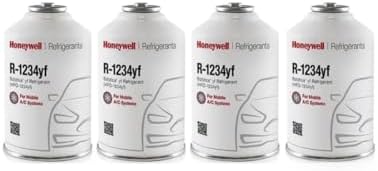
- Designed for modern BMW models (2016+) using R1234yf
- OEM-grade refrigerant used in factory AC systems
- High cooling efficiency with low environmental impact
- Works with most R1234yf service tools and gauges
- Sealed cans to prevent leakage and contamination
Best for: BMW G-series (X5, X3, 3 Series, 5 Series, etc.)
2. A/C Pro R-134a Recharge Kit

- One A/C Pro Auto AC Recharge Gauge and Hose Dispenser, ACP410-4
- Extra large easy-to-read gauge for accurate charging
- 24″ AC charging hose is long enough to reach difficult ports
- Popular R134a refrigerant kit for older BMW models
- Includes hose and pressure gauge for DIY recharge
- Contains refrigerant + oil conditioner for system lubrication
- Easy-to-use trigger dispenser for controlled filling
- Helps restore cooling performance quickly
Best for: BMW models made before ~2015–2016 (E90, E60, E70, etc.)
3. ZeroR R-134a AC Refrigerant
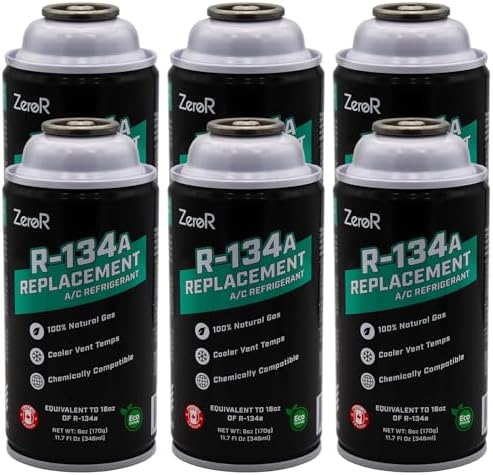
- GREEN REFRIGERATION SOLUTION: ZeroR AC Refrigerant is a 100% natural hydrocarbon gas, offering a more eco-friendly alter…
- R134A READY INSTALLATION: Designed to fit R134a systems, ZeroR AC Refrigerant installs just like any standard refrigeran…
- SMALLER CAN BIGGER IMPACT: Each can of our car AC refrigerant holds 6oz of refrigerant, but its performance is equivalen…
- High-quality R134a replacement refrigerant
- Designed for automotive AC systems like older BMWs
- Stable cooling performance under hot weather conditions
- Compatible with standard R134a service ports
- Convenient multi-can pack for multiple refills
Best for: BMW 1, 3, 5, X series older R134a systems
Important Notes About BMW Refrigerant Capacity
BMW refrigerant capacity is not universal because:
- Different engines use different condenser sizes
- Dual-zone or rear climate control increases capacity
- Compressor type varies across generations
- Cabin size directly affects refrigerant volume
- Model updates may switch refrigerant type mid-generation
R134a vs R1234yf Transition
- Before ~2013–2016: Most BMWs use R134a
- After ~2016 onward: Most new models use R1234yf
- Mixing refrigerants is not recommended and can damage the AC system
Related Ford Refrigerant Capacity Charts(for All Models)
Signs Your BMW AC Needs Refrigerant
If your BMW is low on refrigerant, you may notice:
- Weak cooling performance
- AC blowing warm air at idle
- Compressor cycling frequently
- Hissing sound from the AC lines
- Frost on the evaporator or inconsistent cooling
FAQs
How much refrigerant does a BMW X5 take?
Most BMW X5 models take between 750g and 900g (about 1.6–2.0 lbs) of refrigerant, depending on the generation and whether the vehicle has rear or dual-zone climate control. Newer models like the G05 X5 typically use R1234yf, while older versions use R134a, but the capacity range remains fairly similar across generations.
How much R-134a refrigerant is required?
For BMW vehicles that use R134a, the required amount typically ranges from 500g to 900g (1.1–2.0 lbs). Smaller models like the 1 Series use less, while larger SUVs and luxury sedans such as the 7 Series or X5 use significantly more due to larger cabin size and multi-zone AC systems.
What kind of refrigerant does a BMW AC take?
BMW AC systems use two main types of refrigerant, depending on the model year:
- R134a – Used in most BMWs manufactured before roughly 2013–2016
- R1234yf – Used in most newer BMW models from around 2016 onward
The correct type is always listed on the under-hood AC label, and mixing refrigerants is not safe or recommended.
When did BMW switch to R-134a?
BMW actually used R134a before switching to R1234yf, not after. The transition to R1234yf began gradually around 2013–2016, depending on the model and market regulations. By the late 2010s, most new BMW models had fully adopted R1234yf due to environmental regulations.
What kind of refrigerant does a 2014 BMW X5 take?
A 2014 BMW X5 (F15) typically uses R134a refrigerant. The system capacity is usually around 750g to 850g, depending on whether the vehicle has additional rear climate control features. Later X5 models (G05 from 2019 onward) switched to R1234yf.
How to refill BMW refrigerant?
Refilling the BMW refrigerant should be done carefully to avoid damaging the AC system:
- Check refrigerant type – Confirm whether your BMW uses R134a or R1234yf (under-hood label).
- Inspect for leaks – Ensure the system is sealed before adding refrigerant.
- Attach the AC manifold gauge – Connect the low-pressure side correctly.
- Vacuum the system – Remove air and moisture using a vacuum pump.
- Add correct refrigerant amount – Charge slowly to the factory-specified capacity.
- Monitor pressure and cooling – Ensure stable readings and proper cooling performance.
Final Thoughts
BMW refrigerant capacity typically falls between 500g and 950g, depending on model and system design. Smaller sedans like the 1 Series require less refrigerant, while large SUVs like the X7 and luxury sedans like the 7 Series require significantly more due to multi-zone climate systems.
Always confirm the exact specification using your BMW’s under-hood label or service manual before recharging, as even small variations in refrigerant quantity can affect performance and compressor health.