
An engine that burns oil can be frustrating, especially when you need to add oil between scheduled changes. This problem is common in older, high-mileage vehicles, but it can also affect newer engines due to worn piston rings, damaged valve stem seals, PCV system problems, or other mechanical issues.
Best Oil for Engine That Burns Oil
No engine oil can reliably fix severe oil burning caused by damaged piston rings, worn valve seals, or other internal engine problems.
1. Valvoline High Mileage with MaxLife Technology
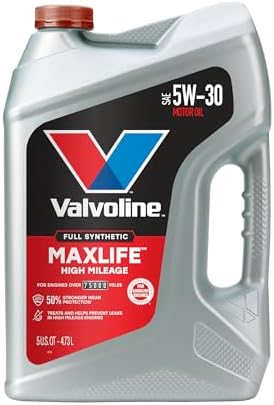
- Designed for vehicles with 75,000 miles or more, Valvoline MaxLife Full Synthetic High Mileage Motor Oil helps maximize …
- Formulated with seal conditioners to help prevent oil leaks, reduce oil consumption, and improve fuel economy
- Delivers 50% stronger wear protection than industry standards for superior defense against friction and wear
Valvoline High Mileage with MaxLife Technology is a popular option for older engines that consume oil or have minor seal-related leaks. Its formulation is designed to support aging engine components while helping maintain lubrication and cleanliness.
Key features:
- Seal-conditioning technology: Helps maintain aging seals and may reduce certain minor leaks.
- Anti-wear protection: Helps protect internal engine components against wear.
- Deposit control: Helps limit sludge and harmful deposits.
- Multiple viscosity grades: Available in different grades, including 5W-30 and 10W-30, depending on the formulation.
- High-mileage formulation: Designed for vehicles with substantial mileage.
Valvoline MaxLife is a practical starting point if your older vehicle consumes oil or has minor external leaks. However, seal conditioners cannot repair worn piston rings or severely damaged valve stem seals.
Always select the viscosity recommended for your particular engine.
Related Engine Burning Oil Treatment(5 Best Additive to Stop Oil Burning)
2. Mobil 1 High Mileage Full Synthetic Motor Oil

- High Mileage for engines 75,000+ miles
- Helps extend engine life of higher mileage vehicles
- Protects for 15,000 miles – guaranteed*
Mobil 1 High Mileage is designed for older vehicles, including those with more than 75,000 miles. It combines synthetic base oils with additives intended to protect against wear, deposits, and certain seal-related leaks.
Key features:
- Full synthetic formulation: Helps protect against oxidation and high-temperature breakdown.
- Seal conditioners: Help maintain aging seals and may reduce certain leaks.
- Anti-wear additives: Help protect engine components during normal operation.
- Cleaning agents: Help control sludge and deposits.
- Multiple viscosity grades: Available options may include 5W-20, 5W-30, 10W-30, and 10W-40, depending on the product.
Mobil 1 High Mileage is worth considering if you want full synthetic protection for an older engine. It can help maintain engine cleanliness and lubrication, but it cannot restore damaged internal components.
If your engine continues to burn oil after switching, monitor the oil level and investigate the underlying cause.
Related 7 Reasons Your Engine Burning Oil(With Solutions)
3. Castrol EDGE High Mileage Full Synthetic Motor Oil

- Phosphorus Replacement Technology to help extend the life of the emission system
- Reduces leaks, oil burnoff and power robbing deposits
- 15,000 miles between oil changes*
Castrol EDGE High Mileage is formulated to provide wear protection and help control deposits in aging engines. It is an option for drivers who want full synthetic oil with a high-mileage-focused formulation.
Key features:
- Full synthetic base oil: Helps provide protection across a range of operating temperatures.
- Wear protection: Helps protect engine components under normal driving conditions.
- Deposit control: Helps keep engine internals cleaner.
- High-mileage formulation: Designed for vehicles with significant accumulated mileage.
- Different viscosity grades: Availability varies by product and application.
This oil may suit an older engine that consumes oil but still operates normally. Its synthetic formulation can help provide ongoing engine protection, particularly when combined with regular maintenance.
However, switching to full synthetic oil does not automatically reduce oil consumption. Some engines will continue burning oil regardless of the brand because internal wear is the primary cause.
Related High Mileage Engine Oil Additive(Top 5 Best Picks 2026)
4. Pennzoil Platinum High Mileage Full Synthetic Motor Oil
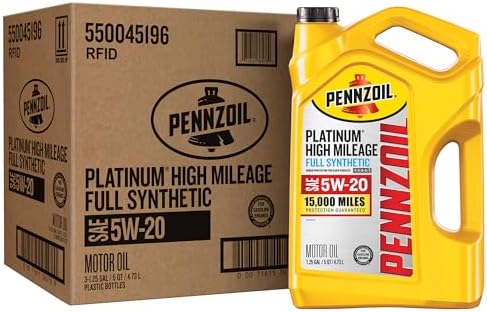
- Full synthetic 5W-20 engine oil designed for vehicles with more than 75,000 miles
- Backed by a 15,000-mile protection guarantee* to keep you covered between oil changes and in the long run
- Keeps pistons cleaner than required by the toughest industry standard (based on Sequence IIIH results)
Pennzoil Platinum High Mileage is designed for older engines that need continued protection against wear and harmful deposits. It is worth considering when oil consumption occurs alongside concerns about engine cleanliness.
Key features:
- Full synthetic formulation: Helps maintain lubrication under varying operating conditions.
- Cleaning and deposit control: Helps limit harmful engine deposits.
- Wear protection: Supports the protection of internal engine components.
- High-mileage application: Designed for vehicles with significant mileage.
- Different product options: Available viscosities and specifications vary by formulation.
Pennzoil Platinum High Mileage is a reasonable choice for a vehicle that needs quality synthetic oil meeting its manufacturer’s specifications.
Good lubrication and deposit control can support engine longevity, but they will not repair worn piston rings or valve stem seals.
If your engine consumes a quart of oil every few hundred miles, changing brands alone is unlikely to solve the problem. Have the engine inspected to determine whether the oil is leaking externally or burning inside the combustion chamber.
Related Best Engine Oil Additive for Noise(5 Best Picks 2026)
5. Castrol GTX High Mileage Synthetic Blend Motor Oil

- Phosphorus Replacement Technology helps extend emission system life
- Superior dispersancy that fights sludge build up
- Exceptional oil burn-off protection exceeding industry standards* | Seal conditioners to help reduce leaks
Castrol GTX High Mileage is designed for older vehicles that need routine lubrication, wear protection, and deposit control. Its synthetic blend formulation may appeal to owners who want a high-mileage-specific oil without choosing a premium full synthetic product.
Key features:
- Synthetic blend formulation: Combines conventional and synthetic base oils.
- Seal protection: Helps protect aging seals and may reduce certain leaks.
- Sludge control: Helps limit deposits that can interfere with proper lubrication.
- Anti-wear protection: Helps protect engine components during normal operation.
- High-mileage focus: Designed for aging engines that need continued maintenance.
Castrol GTX High Mileage is worth considering if your vehicle has substantial mileage and you prefer a synthetic blend. However, it is not a guaranteed treatment for oil burning.
Choose the correct viscosity for your vehicle rather than assuming a thicker grade will work better.
Related Best Oil for High Performance Engines(Top 5 Best 2026)
How to Choose Oil for an Engine That Burns Oil
Before buying engine oil, determine why your engine is consuming oil. The cause makes a significant difference in which solution is likely to work.
1. Check the Recommended Viscosity
Your owner’s manual specifies the appropriate viscosity grade and performance requirements. Common grades include 0W-20, 5W-20, 5W-30, and 10W-30, but not every grade is suitable for every engine.
A thicker oil may sometimes reduce consumption in a worn engine. However, using a viscosity outside the manufacturer’s recommendations can affect cold starts, lubrication, fuel economy, and variable valve timing systems.
2. Consider a High-Mileage Formulation
High-mileage oils are designed for engines that have accumulated considerable mileage. Depending on the product, they may contain seal conditioners, detergents, dispersants, and anti-wear additives.
These ingredients can support engine protection and may help with certain minor leaks. They cannot reliably repair damaged piston rings, worn cylinder walls, or deteriorated valve stem seals.
3. Understand Synthetic Versus Synthetic Blend
Full synthetic oil generally offers strong resistance to oxidation and temperature-related breakdown. Synthetic blends can provide a practical alternative when they meet the vehicle’s requirements.
Neither type is guaranteed to reduce oil consumption. The correct specification, engine condition, and maintenance schedule matter more than choosing synthetic oil simply because it is marketed as a premium product.
4. Avoid Choosing Oil Based on Mileage Alone
A vehicle with 150,000 miles that consumes no oil may need a different product from a vehicle with 80,000 miles that burns a quart every 500 miles.
Consider the rate of oil consumption, vehicle age, driving conditions, and manufacturer recommendations. If consumption has increased suddenly, investigate the cause before experimenting with different oils.
What Causes an Engine to Burn Oil?
Several mechanical problems can cause an engine to consume excessive oil.
- Worn piston rings: Allow oil to enter the combustion chamber and burn with the fuel-air mixture.
- Worn valve stem seals: Allow oil to pass through the valve area into the combustion chamber.
- PCV system problems: A faulty positive crankcase ventilation system can draw excessive oil into the intake.
- External oil leaks: Oil escaping from gaskets or seals may be mistaken for oil burning.
- Turbocharger problems: On turbocharged engines, worn seals or other faults can allow oil into the intake or exhaust system.
- Internal engine wear: Worn cylinder walls and other damaged components can increase oil consumption.
Blue or blue-gray exhaust smoke can indicate burning oil, although the absence of visible smoke does not rule out oil consumption.
A mechanic may recommend inspecting the PCV system, checking for external leaks, or performing compression and leak-down tests to identify the cause.
How to Reduce Oil Consumption
Follow these practical steps to protect your engine:
- Check the dipstick regularly and record how much oil you add.
- Keep the oil level within the manufacturer’s specified range.
- Repair external leaks and faulty PCV components.
- Use the correct oil viscosity and performance specification.
- Change the oil and filter according to the recommended maintenance schedule.
- Investigate excessive or rapidly increasing oil consumption promptly.
Do not overfill the crankcase. Excess oil can cause aeration and other engine problems.
FAQs
What Is the Best Oil for an Engine That Burns Oil?
Valvoline High Mileage with MaxLife Technology is a sensible starting point for many older engines. Mobil 1 High Mileage and Castrol EDGE High Mileage are alternatives for drivers who prefer full synthetic oil. The best option is the one that meets your engine’s required viscosity and specifications.
Will Thicker Oil Stop an Engine From Burning Oil?
Not necessarily. A thicker oil may reduce consumption in some worn engines, but it will not fix mechanical damage. Consult your owner’s manual or a qualified mechanic before changing viscosity.
Is Full Synthetic Oil Better for an Engine That Burns Oil?
Full synthetic oil can offer strong oxidation resistance and wear protection, but it does not automatically reduce oil consumption. The cause of the problem and the oil’s compatibility with the engine are more important.
Should I Use an Oil Additive to Stop Oil Burning?
Some additives claim to reduce oil consumption, but results vary, and they cannot repair major mechanical wear. Check compatibility with your engine and avoid products that could interfere with the required oil specification.
When Should I Have My Engine Inspected?
Arrange an inspection if oil consumption increases suddenly, the engine produces persistent blue smoke, or you need frequent top-ups. Stop driving if the oil-pressure warning indicates inadequate oil pressure.
Final words
The best oil for an engine that burns oil is not necessarily the thickest or most expensive option. For many older vehicles, Valvoline High Mileage with MaxLife Technology is a practical first choice because of its high-mileage formulation and seal-conditioning focus.
Mobil 1 High Mileage and Castrol EDGE High Mileage are alternatives for drivers seeking full synthetic protection. Pennzoil Platinum High Mileage and Castrol GTX High Mileage offer additional options depending on your budget and engine requirements.
Before switching oils, confirm your vehicle’s recommended viscosity and oil specification. Most importantly, monitor oil consumption and investigate its cause. The right oil can help protect an aging engine, but diagnosing the underlying problem is the best way to prevent further damage.