
Hot weather can put additional stress on your vehicle’s engine oil, especially when driving in heavy traffic, towing, climbing hills, or traveling long distances. Choosing the best engine oil for hot weather helps maintain lubrication, control deposits, and protect internal engine components when temperatures rise.
Best Engine Oil for Hot Weather
1. Mobil 1 Extended Performance Full Synthetic Motor Oil – SAE 5W-30

- The information below is per-pack only
- Mobil 1 Extended Performance full-synthetic motor oil 5W-30 helps protect critical engine parts for up to 20,000 miles b…
- Utilizes Mobil 1’s Triple Action+ Formula to combine outstanding engine performance, protection, and cleanliness with th…
Mobil 1 Extended Performance is a strong option for drivers looking for a full synthetic oil designed for demanding operating conditions. Its formulation is intended to protect against engine wear, sludge, and high-temperature deposits.
Full synthetic oil is worth considering if you frequently drive in hot weather, experience stop-and-go traffic, or regularly take long highway trips. However, the exact viscosity and specification must match your engine.
Key features:
- Full synthetic formulation for everyday and demanding driving.
- Designed to help protect against engine wear.
- Helps control sludge and high-temperature deposits.
- Formulated to resist oil breakdown under demanding conditions.
- Available in multiple viscosity grades, depending on the product version.
Best for: Drivers who want a premium synthetic oil for regular commuting, highway driving, and demanding conditions.
Related Engine Oil Numbers Mean(Complete Guide To All Numbers)
2. Castrol EDGE Full Synthetic Motor Oil – SAE 5W-30
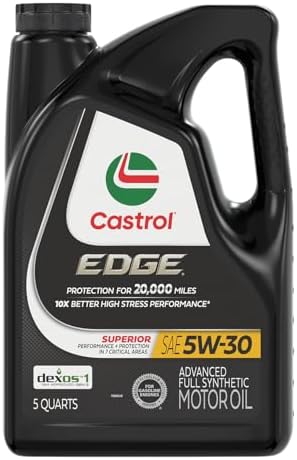
- 3X Stronger than the leading full synthetic*
- 10X Better high stress performance**
- 20,000 miles between oil changes***
Castrol EDGE is another good candidate for hot-weather driving. The manufacturer emphasizes high-stress performance, viscosity stability, wear protection, and deposit control. These qualities can be useful when an engine operates under sustained loads or experiences repeated temperature cycles.
Castrol EDGE is offered in different viscosity grades and formulations, so select the exact version specified in your owner’s manual.
Key features:
- Full synthetic formulation.
- Designed to maintain viscosity under high stress.
- Helps protect against friction and engine wear.
- Supports deposit and sludge control.
- Available in different grades for compatible gasoline and diesel applications.
Best for: Drivers seeking synthetic protection for daily driving, highway travel, and vehicles that regularly operate under heavier loads.
Related How Long to Let Engine Cool Before Adding Oil
3. Valvoline Advanced Full Synthetic Motor – Oil SAE 5W-30

- Advanced protection against the four main causes of engine breakdown: wear friction heat and deposits
- Delivers 40% stronger wear protection than industry standards to reduce friction and improve fuel economy
- Provides 15% better deposit defense vs. industry standards, keeping engines cleaner for smoother performance and longer-…
Valvoline Advanced Full Synthetic is worth considering if you want everyday engine protection in a hot climate. The product line focuses on wear protection, deposit control, and resistance to oil degradation.
Hot ambient temperatures can contribute to more demanding operating conditions, but the engine’s internal temperature and workload also matter. A quality synthetic oil that meets the correct specification can help maintain a protective oil film without requiring an unnecessarily thick viscosity grade.
Key features:
- Full synthetic formulation.
- Designed to help protect against engine wear.
- Helps control sludge and deposits.
- Intended for routine driving and demanding operating conditions.
- Offered in several viscosity grades and product variants.
Best for: Daily drivers who want a full synthetic oil for commuting, road trips, and warm-weather operation.
Related Best High Mileage Engine Oil(5 Best Brands Picks)
4. Pennzoil Platinum Full Synthetic Motor Oil – SAE 5W-30

- 5W-30 motor oil formulated to keep engines clean and responsive
- Provides proven wear protection (based on Sequence IVA wear test using SAE 5W-30)
- Helps prevent dirt and contaminants from turning into performance-robbing deposits
Pennzoil Platinum is a popular full synthetic option for drivers who want engine cleanliness and reliable lubrication across a range of operating conditions. Its PurePlus Technology uses a base oil made from natural gas.
In hot weather, keeping deposits under control is important because prolonged high-temperature operation can accelerate oil oxidation and affect lubricant performance. Pennzoil Platinum is a candidate for drivers who want synthetic oil that supports everyday engine protection.
Key features:
- Full synthetic formulation.
- Designed to help keep pistons clean.
- Helps protect against wear and deposit formation.
- Intended to provide protection across a range of driving conditions.
- Available in different viscosities for compatible engines.
Best for: Drivers who prioritize engine cleanliness and synthetic lubrication for daily use and long-distance driving.
Related High Detergent Engine Oil(Top 5 Best Picks 2026)
5. Mobil 1 High Mileage Full Synthetic Motor Oil – SAE 5W-30

- The information below is per-pack only
- Mobil 1 High Mileage full-synthetic motor oil 5W-30 is designed for engines with over 75,000 miles to go up to 10,000 mi…
- Utilizes Mobil 1’s signature Triple Action Formula to deliver outstanding engine performance, protection, and cleanlines…
Mobil 1 High Mileage is worth considering for older vehicles that have accumulated substantial mileage. High-mileage formulations are designed with the needs of aging engines in mind, including deposit control and helping manage oil consumption.
Hot weather may make existing oil leaks or oil consumption more noticeable in some vehicles. However, high-mileage oil cannot repair worn seals, damaged gaskets, or internal mechanical problems. If your vehicle consumes oil, check the level regularly and investigate any sudden increase.
Key features:
- Full synthetic formulation for eligible high-mileage applications.
- Designed to help protect against engine wear.
- Helps control sludge and deposits.
- Intended to support the needs of older engines.
- Available in selected viscosity grades, depending on the formulation.
Best for: Owners of older, high-mileage vehicles who want synthetic oil suited to their engine’s requirements.
Related Best Oil for High Performance Engines(Top 5 Best 2026)
How to Choose the Best Engine Oil for Hot Weather
Choosing the right oil involves more than looking at the temperature outside. Consider these important factors before buying.
1. Choose the Correct Viscosity
Viscosity describes how readily oil flows. In a grade such as 5W-30, the first number and W indicate cold-temperature flow performance, while 30 identifies the oil’s high-temperature viscosity classification.
Some engines specify 0W-20 or 5W-20 even in hot climates. Others require 5W-30, 5W-40, 10W-30, or another grade. Do not automatically switch to thicker oil just because summer temperatures are high. Follow the owner’s manual and any applicable manufacturer updates.
2. Consider Full Synthetic Oil
Full synthetic oil can offer advantages in thermal stability, oxidation resistance, and performance across temperature ranges, depending on the formulation. It can be particularly useful for vehicles exposed to frequent traffic congestion, long journeys, or heavy workloads.
However, synthetic oil is not automatically suitable for every engine. Check the required viscosity and industry or manufacturer specifications before purchasing.
3. Check the Oil Specification
The correct SAE grade is only one part of oil selection. Your vehicle may require a particular API service category, ILSAC standard, or manufacturer approval.
Check the bottle label and product information to confirm that the exact oil meets your vehicle’s requirements. This is especially important for turbocharged engines, modern vehicles with emissions-control systems, and diesel engines.
4. Consider Your Driving Conditions
Driving in hot weather can involve very different conditions. A car used for short urban trips may experience frequent starts and stops, while a truck towing a heavy trailer may operate under sustained loads.
For severe-duty use, follow the manufacturer’s maintenance schedule and any guidance for towing or extreme operating conditions. Do not assume that the oil suitable for an ordinary passenger car will also suit a diesel truck or small gasoline engine.
Related Engine Oil With Most Zinc(Top 5 Best 2026)
Tips for Protecting Your Engine in Hot Weather
Choosing good engine oil is only part of maintaining your engine during hot weather. These additional practices can help:
- Check oil levels regularly. High oil consumption can leave an engine under-lubricated if the level is not monitored.
- Change oil on schedule. Follow the recommended interval, adjusting for severe service when the manufacturer calls for it.
- Inspect for leaks. Check around the valve cover, oil pan, filter, and other potential leak points.
- Maintain the cooling system. Check coolant levels and address overheating promptly. Engine oil is not a substitute for a properly functioning cooling system.
- Use the correct oil filter. Choose a filter compatible with your vehicle and follow the manufacturer’s replacement guidance.
- Avoid unnecessary viscosity changes. Thicker oil is not automatically better in hot weather, particularly in engines designed for low-viscosity lubricants.
Related Best Engine Oil for Big Block Chevy(5 Best Picks 2026)
FAQs
Is 5W-30 Good for Hot Weather?
Yes, 5W-30 can be suitable for hot weather when it is the viscosity recommended for your engine. Many modern engines use this grade across a broad range of ambient temperatures.
Is 10W-40 Better Than 5W-30 in Hot Weather?
Not necessarily. SAE 10W-40 is thicker at operating temperature than SAE 5W-30, but that does not automatically make it better. Use 10W-40 only when the manufacturer permits or specifies it for your engine and operating conditions.
Is Full Synthetic Oil Better for Hot Climates?
A suitable full synthetic oil can offer strong oxidation resistance and high-temperature performance. The actual benefit depends on the formulation, engine design, and driving conditions. Correct specifications remain essential.
Should I Use Thicker Oil if My Engine Burns Oil?
Not without checking the manufacturer’s guidance. Some engines permit alternative viscosities under specific conditions, but oil consumption can also indicate leaks, worn components, or other problems that require diagnosis.
Final words
The best engine oil for hot weather is one that maintains reliable lubrication at high operating temperatures while meeting your engine manufacturer’s requirements. Mobil 1 Extended Performance, Castrol EDGE, Valvoline Advanced Full Synthetic, Pennzoil Platinum, and Mobil 1 High Mileage are five options worth considering, provided you select the correct product formulation and viscosity.
For most modern passenger vehicles, start with the oil grade specified in the owner’s manual rather than choosing a thicker oil based on outdoor temperatures alone.
Disclaimer: Product suitability depends on the vehicle’s make, model, engine, model year, and operating conditions. Always verify the recommended viscosity, API or ILSAC category, and any required manufacturer approvals before purchasing.