
This guide covers Hyundai Tucson oil capacities, recommended oil types, oil change intervals, and tips for checking and maintaining engine oil levels.
Hyundai Tucson Engine Oil Capacity
Most Hyundai Tucson models have an engine oil capacity between approximately 4.0 and 6.0 quarts, depending on the engine.
| Model years | Engine options | Approximate oil capacity |
|---|---|---|
| 2005–2009 | 2.0L 4-cylinder | 4.0–4.3 L |
| 2005–2009 | 2.7L V6 | Approximately 4.5 L |
| 2010–2015 | 2.0L / 2.4L gasoline | Approximately 4.0–4.5 L |
| 2016–2021 | 2.0L / 2.4L gasoline | Approximately 4.0–5.0 L |
| 2016–2021 | 1.6L turbo gasoline | Approximately 4.5–5.0 L |
| 2022–2026 | 2.5L gasoline | Approximately 5.8 L |
| 2022–2026 | 1.6L turbo gasoline | Approximately 4.8 L |
Hyundai has offered the Tucson with several gasoline and diesel engines over the years. Consequently, the oil capacity is not the same across all generations.
Note: This is a general generation-level reference, not a substitute for exact factory specifications. Diesel versions, hybrids, and regional engine configurations may have different capacities.
Related Hyundai Elantra Engine Oil Capacity(For All Models)
Best Engine Oils for Hyundai Tucson
1. Mobil 1 Advanced Fuel Economy 0W-20 Full Synthetic Motor Oil
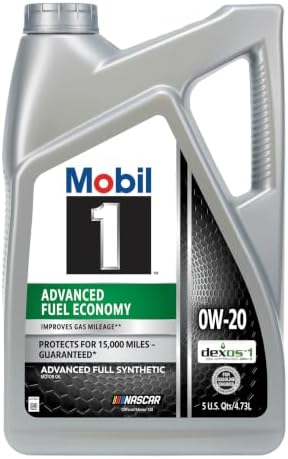
- Improves Gas Mileage***
- Helps increase engine efficiency
- Protects for 15,000 miles – guaranteed*
Mobil 1 Advanced Fuel Economy 0W-20 is a full synthetic engine oil designed to reduce friction and support fuel efficiency. It provides engine protection against wear, sludge, and deposits while maintaining reliable lubrication during cold starts.
Features:
- Full synthetic formula designed for improved fuel economy.
- Helps reduce engine friction and wear.
- Provides protection against sludge and deposits.
- Supports reliable cold-weather engine starts.
- Meets API SP and ILSAC GF-6 specifications.
2. Castrol EDGE Advanced Full Synthetic 0W-20
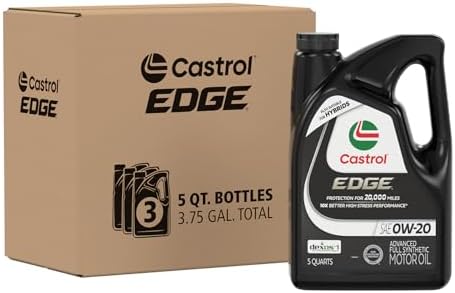
- 3X Stronger than the leading full synthetic*
- 10X Better high stress performance**
- 20,000 miles between oil changes***
Castrol EDGE Advanced Full Synthetic 0W-20 is designed to provide strong engine protection under different driving conditions. Its advanced synthetic formulation helps reduce metal-to-metal contact and protects engine components against wear and high-temperature oil breakdown.
Features:
- Advanced full synthetic engine oil formulation.
- Helps reduce metal-to-metal contact.
- Provides protection against high-temperature breakdown.
- Helps keep engine components clean.
- Meets API SP and ILSAC GF-6 specifications.
3. Valvoline Advanced Full Synthetic 0W-20

- The information below is per-pack only
- Advanced protection against the four main causes of engine breakdown: wear friction heat and deposits
- Delivers 40% stronger wear protection than industry standards to reduce friction and improve fuel economy
Valvoline Advanced Full Synthetic 0W-20 is another option for Hyundai Tucson gasoline engines requiring this viscosity. It is formulated to protect against engine wear, sludge, and deposits while maintaining lubrication during everyday driving.
Features:
- Full synthetic formula for engine protection.
- Helps prevent sludge and deposit buildup.
- Provides wear protection under demanding driving conditions.
- Supports reliable cold-start lubrication.
- Available in API SP and ILSAC GF-6 compliant formulations.
Our Recommendation
Mobil 1 Advanced Fuel Economy 0W-20 is an excellent all-around option for compatible Hyundai Tucson gasoline engines. Castrol EDGE and Valvoline Advanced Full Synthetic are also good alternatives.
Related Hyundai Sonata Engine Oil(3 Best Picks 2026)
Important: These recommendations apply to engines that specify SAE 0W-20. Some Hyundai Tucson models require different oil viscosities or diesel-specific specifications. Always check your owner's manual before purchasing engine oil.What Type of Oil Does a Hyundai Tucson Take?
The recommended engine oil depends on the engine design, model year, and operating conditions. Hyundai specifies different oil viscosities and performance standards for its Tucson engines.
Here are some common oil grades:
- SAE 0W-20: Used in several newer Smartstream gasoline engines, including the 2.0L, 1.6L turbo, and 2.5L configurations covered by the 2025 manual.
- SAE 5W-20: Commonly specified for some older naturally aspirated Tucson gasoline engines.
- SAE 5W-30: Used in certain older turbocharged gasoline and diesel applications, depending on the market and engine.
- ACEA C2, C3, or C5: Specifications used for certain diesel engines equipped with diesel particulate filters.
For newer gasoline engines, Hyundai recommends oil meeting API SN PLUS/SP or ILSAC GF-6, depending on the engine specification. Always prioritize the viscosity and performance standard listed in your owner’s manual.
Related Hyundai Engine Oil Capacity Chart(Models A to Z)
How to Check the Engine Oil Level in a Hyundai Tucson
Checking your Tucson’s engine oil regularly helps prevent lubrication problems and premature engine wear. You can check the oil using the following steps:
- Park your vehicle on a level surface.
- Switch off the engine and allow the oil to settle.
- Wait approximately 15 minutes before checking the level.
- Locate the engine oil dipstick and pull it out.
- Wipe the dipstick clean using a lint-free cloth.
- Insert it fully into its tube and pull it out again.
- Check the oil level against the minimum and maximum markings.
- If the level is below the recommended range, add the correct engine oil gradually.
Avoid filling the engine beyond the maximum mark. Overfilling can cause excessive pressure, foaming, and potential engine damage.
Hyundai also recommends monitoring oil consumption regularly because driving habits, traffic, climate, and oil quality can affect how much oil an engine uses.
Related Hyundai Sonata Engine Compatibility Chart(for All Models)
When Should You Change Hyundai Tucson Engine Oil?
The oil change interval depends on the engine, model year, and driving conditions. For many newer Tucson gasoline models, the normal maintenance schedule allows oil changes at intervals of around 7,500–10,000 miles, depending on the applicable maintenance schedule.
However, you may need more frequent oil changes if you regularly drive under severe conditions, including:
- Frequent short-distance trips.
- Heavy traffic and prolonged idling.
- Driving on dusty or unpaved roads.
- Regular towing or carrying heavy loads.
- Operating in extremely hot or cold weather.
- Repeated stop-and-go driving.
Always follow the maintenance schedule specified in your owner’s manual. Replace the oil filter whenever you change the engine oil.
Related Hyundai Santa Fe Engine Oil Capacity(For All Variants)
What Happens If You Use the Wrong Engine Oil?
Using an incorrect oil viscosity or specification can affect engine lubrication and performance. Modern Tucson engines, particularly turbocharged and direct-injection models, depend on engine oil that meets specific performance requirements.
Oil that is too thick may circulate less effectively during cold starts, while oil that is too thin may not provide the intended protection under certain operating conditions.
Using oil that does not meet the required manufacturer specification can also contribute to deposits, increased wear, and reduced engine efficiency.
For this reason, do not select engine oil based only on its viscosity. Check both the SAE grade and the required API, ILSAC, or ACEA classification.
How Much Oil Does a Hyundai Tucson Need During an Oil Change?
The amount of oil required depends on the engine and whether the oil filter is replaced. Most Tucson gasoline engines require approximately 4–6 quarts.
When performing an oil change, it is best to start by adding slightly less than the specified capacity. Run the engine briefly, switch it off, wait for the oil to settle, and check the dipstick. Add more oil gradually until the level reaches the recommended mark.
Do not pour the entire estimated capacity into the engine without checking the oil level.
FAQs
How many quarts of oil does a Hyundai Tucson take?
Most Hyundai Tucson engines require approximately 4–6 quarts of engine oil. The exact amount depends on the model year and engine configuration. Newer 2.5L engines, for example, require approximately 6.13 US quarts.
What oil does a 2025 Hyundai Tucson 2.5L take?
The 2025 Hyundai Tucson with the 2.5L Smartstream GDI engine requires SAE 0W-20 engine oil meeting API SN PLUS/SP or ILSAC GF-6 specifications.
Can I use 5W-30 instead of 0W-20 in my Hyundai Tucson?
Not unless Hyundai approves that viscosity for your particular engine and operating conditions. Using an unapproved oil grade can affect engine lubrication and performance.
Does Hyundai Tucson require synthetic oil?
Many newer Tucson engines specify modern engine oils that are commonly sold as full synthetic. Always check the manufacturer’s recommended oil specification before purchasing.
How often should I check my Hyundai Tucson engine oil?
Check the engine oil regularly, ideally every few weeks and before longer journeys. Older engines and vehicles with higher mileage may require more frequent monitoring.
Final Thoughts
The Hyundai Tucson engine oil capacity ranges from approximately 4.0 to 5.8 liters across many common gasoline engine configurations, although some diesel versions and older engines have different requirements.
Choosing the correct oil capacity, viscosity, and performance specification is essential for protecting your engine. Always consult your vehicle’s owner’s manual before performing an oil change, and check the dipstick after refilling to avoid overfilling.